


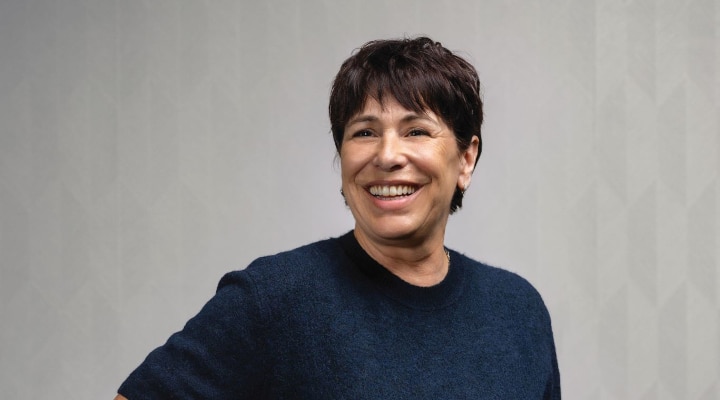
It was a real pleasure for me to interview the renowned perfumer Mark Buxton. Many of you are probably already familiar with his name, as he has been creating fragrances for international brands for more than four decades and has developed numerous successful compositions. Most recently, he developed the two new fragrances, Eau D’Ivine and Eau D’Éclat, for Gravel.
In this interview, Mark Buxton talks about his unusual start in perfumery, the scents of his childhood, and his approach to his work as a perfumer. Of course, we also discuss Eau D’Ivine and Eau D’Éclat, as well as what he believes makes a truly good fragrance.
Dear Mark, you’re a household name in the world of perfume. How did your journey into the world of fragrances begin?
I have been involved in the perfume industry for over 40 years. My journey into the industry began after I was discovered on the well-known German TV show *Wetten, dass..?*. Shortly thereafter, I received an offer from a major fragrance manufacturer to complete an apprenticeship as a perfumer. That’s how my professional career began.
Are there any early memories associated with smells that have stayed with you to this day, or perhaps even shaped who you are?
Yes, I have many memories of products and scents that I used to love and still love today. I grew up in the kitchen of a restaurant in Germany, and even as a child I loved spending time with the chefs, surrounded by spices, herbs, and all those aromatic scents. These memories stay with me to this day and inspire my work as a perfumer.
I especially enjoy working with rosemary, thyme, basil, and tarragon, as well as notes like curry, lovage, and other spicy accords. These scents stem from my childhood and remain an important part of my creative world to this day.
How do you approach creating a new fragrance these days? Do you start with a specific idea, an ingredient, or a particular feeling?
That depends entirely on the project. Basically, I always start with a blank sheet of paper. It all begins with the main idea—the DNA of the fragrance. Usually, there are three or four raw materials that give the perfume its character.
Of course, the briefing also plays an important role and often sets the direction from the start. That’s why I approach each formula differently.
You’re known for your concise forms and a very precise compositional style. What appeals to you about this minimalist approach to composition?
Yes, I like to work with concise formulas. As I mentioned earlier, my goal is to capture the essence of a fragrance as precisely as possible. Usually, the focus is on three or four raw materials around which the entire composition is built.
I think that’s exactly what gives a fragrance its character and uniqueness. This way of working is simply my signature style.
How did the collaboration with Gravel come about? What particularly appealed to you about this project?
Christian, the CEO of Gravel, asked me if I’d like to work on some of the brand’s new projects—which, of course, I was more than happy to do.
Every brand has its own identity. That’s why I wanted to create something special for Gravel—a fragrance that also reflects the freshness the brand is known for. That’s how the project began.
What was your initial concept for Eau D’Ivine?
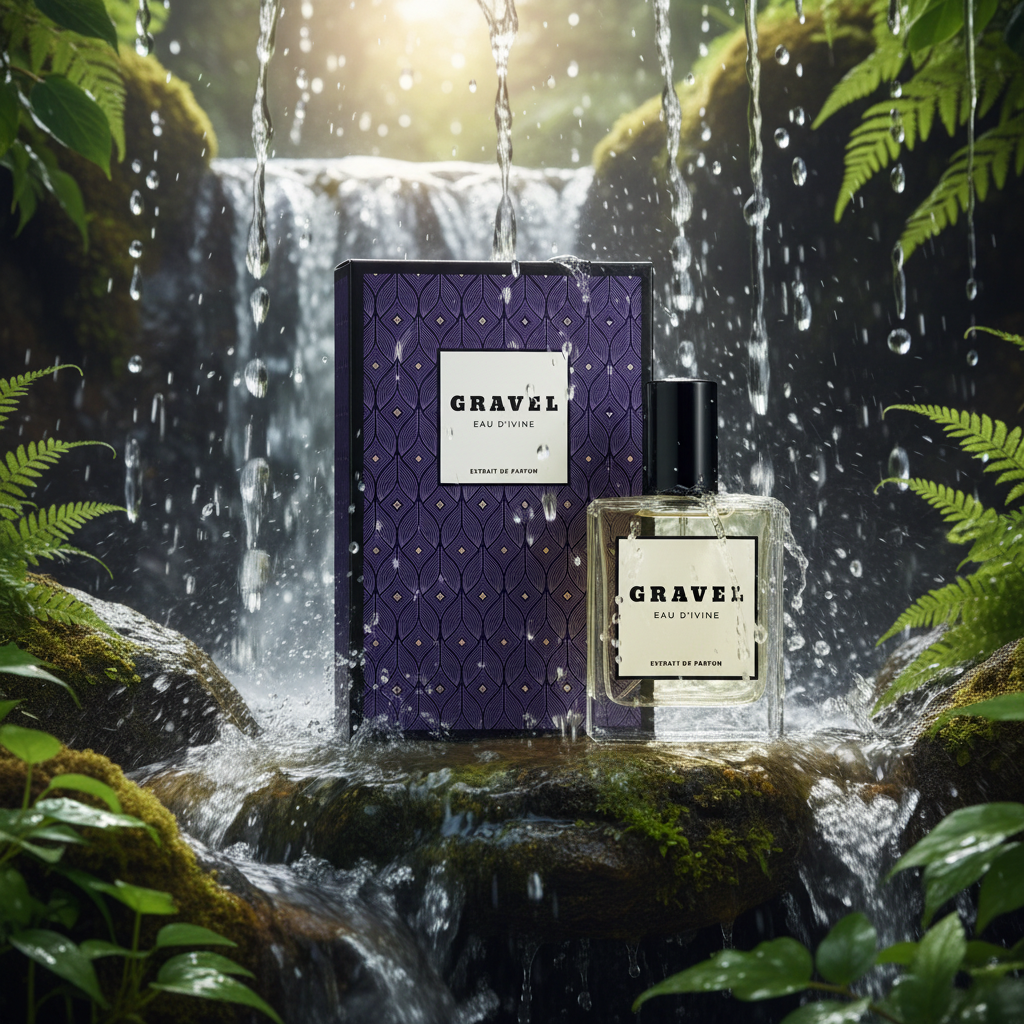
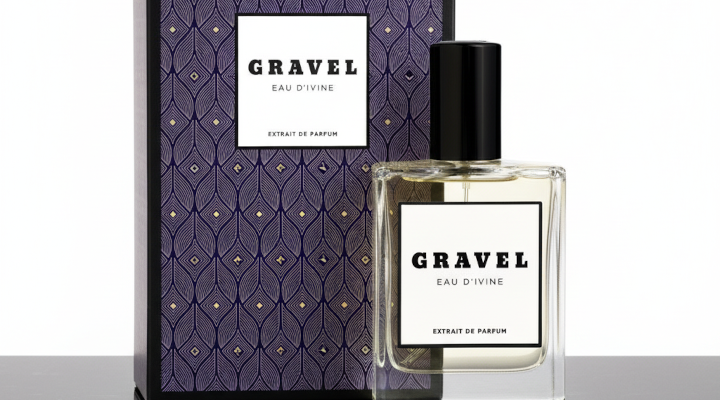
For Eau D’Ivine, I wanted to create a fragrance inspired by the island of Cyprus. That’s why the composition opens with a radiant, fresh, and vibrant top note of pink grapefruit, bergamot, geranium, and a crisp apple accord.
The heart note is slightly spicy yet elegant—featuring elemi, a beautifully fresh, aquatic-like rose, and subtle hints of lavender.
In the drydown, the fragrance unfolds as warm, woody, and elegant, with rich vanilla, tonka bean, soft musk notes, and—quite typical of my signature style—a sophisticated vetiver note.

And what about Eau D’Éclat?
As for Eau D’Éclat, the name itself reflects the character of the fragrance—radiant, luminous, and full of light. For this creation, I chose black currant as one of the central elements of the top note, combined with davana and pomegranate. The opening is lively, radiant, and full of energy.
At its heart, the fragrance becomes softer and more elegant, revealing delicate notes of magnolia and lily of the valley, along with subtle oolong tea accords that lend the composition a sense of transparency and sophistication.
All of this rests on a sophisticated base of patchouli, soft incense, sandalwood, and warm amber notes. The finish gives the fragrance a beautiful sillage and leaves behind an elegant and sensual signature.
What makes Eau D’Ivine and Eau D’Éclat typical Gravel fragrances?
I think these two fragrances fit perfectly into the world of Gravel. They capture the brand’s signature freshness while also bringing a certain originality to the table. That’s exactly what makes the difference for me.
Are Eau D’Ivine and Eau D’Éclat typical of your style?
Every perfumer has their own signature style, in a way. Of course, that doesn’t mean they can’t adapt to different styles.
However, these two briefings were rather unusual for me, since I usually work with oriental, woody, dark, or smoky compositions rather than classic fresh scents.
That’s exactly why this project was such an exciting challenge for me. I tried to give both fragrances as much character as possible. And I think I succeeded.
Would you have composed Eau D’Ivine and Eau D’Éclat the same way ten years ago—or do they show how your style has evolved?
Of course, one’s personal style continues to evolve over the years. I have been working in the perfume industry for more than 40 years now, and during that time I have become familiar with countless new ingredients—new aromatic chemicals, natural extracts, and innovative technologies.
As a perfumer, you’re constantly discovering new aspects of these materials and using them in different ways. This allows your own signature style to continually evolve. Of course, you maintain your personal signature style, but at the same time, you incorporate new facets and modern textures into your creations.
Today, for example, we have access to significantly more aquatic notes and innovative molecules than we did twenty years ago. And the same is true for many other raw materials.
That’s why my own approach to work changes quite naturally over time. I don’t know if these scents would have smelled the same ten years ago as they do today, but I think my signature style is still clearly recognizable.

And finally: What makes a fragrance truly great in your opinion today? And where do you see the future heading for you and the perfume industry in the coming years?
I believe that every fragrance needs a distinctive signature. That has always been essential to me when creating perfumes.
Countless fragrances are launched every year. If you really want to stand out and be distinctive, you need character—something that’s instantly recognizable and, ideally, will still be around ten years from now.
It will be interesting to see how the perfume industry continues to evolve. New trends, new fragrance chemicals, and new natural raw materials are constantly emerging, all of which influence fragrance creation.
That’s hard to predict. What matters most to me is continuing to create fragrances with their own identity and genuine originality—and not simply repeating what already exists.
Dear Mark, thank you very much for taking the time to answer my questions.

Be First to Comment